

How To Set Temperature On Sous Vide
One time express to the pros, sous vide (pronounced sue-veed) is a cooking technique that utilizes precise temperature command to deliver consistent, restaurant-quality results. High-cease restaurants have been using sous vide cooking for years to cook nutrient to the exact level of doneness desired, every time. The technique recently became popular for habitation cooks with the availability of affordable and easy-to-apply sous vide precision cooking equipment like the Anova's Sous Vide Cooker.
Sous vide, which means "under vacuum" in French, refers to the process of vacuum-sealing food in a bag, then cooking it to a very precise temperature in a h2o bathroom. This technique produces results that are impossible to achieve through any other cooking method.
Sous vide cooking is much easier than you might think, and normally involved three simple steps:
1. Adhere your precision cooker to a pot of water and ready the time and temperature co-ordinate to your desired level of doneness.
2. Put your food in a sealable bag and prune it to the side of the pot.
3. Finish by searing, grilling, or broiling the food to add a crispy, golden exterior layer.
Sous vide cooking utilizes precise temperature control with circulation to produce results that yous can't achieve through whatever other cooking technique. The reason–when using traditional methods of cooking, y'all don't take control over heat and temperature. Consequently, information technology'south very difficult and time consuming to consistently cook smashing food. Food ends up overcooked on the outside, with simply a small portion in the heart that is cooked to the temperature you desire. Food loses flavour, overcooks easily, and ends upwards with a dry out, chewy texture.
With precise temperature command in the kitchen, sous vide provides the following benefits:
Consistency. Considering you cook your food to a precise temperature for a precise amount of time, you can wait very consistent results.
Taste. Food cooks in its juices. This ensures that the food is moist, juicy and tender.
Waste reduction. Traditionally prepared food dries out and results in waste. For example, on average, traditionally cooked steak loses upwards to forty% of its volume due to drying out. Steak cooked via precision cooking, loses none of its book.
Flexibility. Traditional cooking can require your constant attention. Precision cooking brings food to an exact temperature and holds it. There is no worry virtually overcooking.
Sous vide provides down-to-the-degree control in the kitchen to evangelize the most tender, flavorful food you lot've ever had. With Anova, it's super simple to get eating place-quality results from edge to border.
Sous Vide Steak vs. Traditionally Cooked Steak
The steak on the left top was cooked sous vide at 129ºF, while the steak on the right bottom was pan-cooked. As illustrated in the comparing above between cooking sous vide steak and pan-cooking steak, there are of import advantages to cooking sous vide over traditional methods.


Sous Vide Salmon vs. Traditionally Cooked Salmon
The salmon cooked with Anova (left top) remains a translucent pink, with a delicate, flaky texture. The pan-cooked salmon (right lesser) has overcooked edges considering the surface temperature of the pan is college than the target cooking temperature. As information technology dries out, it begins to expel the white albumin.


Sous Vide Eggs vs. Traditionally Cooked Eggs
Whether yous're a poached egg perfectionist or a fan of soft-boiled, sous vide makes your ideal egg achievable every fourth dimension. The egg on the left meridian cooked consistently to the desired texture. On the right bottom, a guessing game resulted in raw and runny yolks with over-thickened whites.


Information technology'south actually very affordable and piece of cake to get started with sous vide cooking thanks to the recent availability of sous vide devices congenital for the home melt. You lot'll need a few things:
- A sous vide precision cooking device
- Packaging for your food, similar resealable bags or canning jars
- A container to hold the water
Types of Sous Vide Machines
Sous vide equipment has existed for decades in professional kitchens around the world, but it has always been beefy, expensive, and overloaded with complex features. This type of equipment somewhen fabricated its way into high-cease specialty retail shops, but remained limited to chefs and consumers with extensive culinary feel.
Cooking shows, social media, and online communities take furthered consumers' cognition of sous vide cooking, just information technology wasn't until Anova released the get-go affordable and easy-to-use consumer device that sous vide became attainable to abode cooks. In that location are now many sous vide options available to the home cook.
Beneath are a few types of equipment for you to consider when you're ready to build your ultimate sous vide setup:
Sous Vide Immersion Circulator
The Anova'south Sous Vide Cooker is a standalone immersion circulator that heats water and circulates it around the pot to maintain precise temperatures evenly. Immersion circulators are an affordable and piece of cake-to-use sous vide auto pick. They practise not come up with a built-in water bath, so they have up very little infinite in your kitchen. Standalone sous vide devices don't crave additional equipment to get started because they clamp on and arrange to any pot you already own. The Anova'due south Sous Vide Cooker is a sous vide immersion circulator. Other examples include ChefSteps Joule, Nomiku, and Sansaire.
Sous Vide H2o Oven
Water ovens are often referred to every bit countertop water baths. They are fully-independent, sous vide devices that are about the size of a microwave and typically cost $500+. Sous vide water ovens heat h2o, but unlike immersion circulators, they do not broadcast the water. This tin atomic number 82 to inconsistencies in the food'southward resulting texture. Examples of water ovens include SousVide Supreme, AquaChef, and Gourmia. Multi-employ cookers like Oliso, Gourmia and Instant Pot also offer sous vide appliances.
DIY Sous Vide Hacks
Cooler, rice cooker, and tiresome cooker hacks are great options for exploring sous vide cooking before y'all determine to buy a device. The Food Lab's J. Kenji Lopez-Alt has a corking mail service on sous vide beer cooler hacks.
Sous Vide Packaging
Sealing foods prevents evaporation and allows for the most efficient transfer free energy from the water to the food. To do and then, simply place your seasoned food in a plastic bag and remove the air using the water immersion technique, a harbinger, or a vacuum sealer.
You don't demand a vacuum sealer to cook sous vide. At that place are lots of options, here are a few of the all-time types of sous vide packaging:
Resealable Bags or Jars
Resealable bags are very versatile, and can be used with the h2o immersion method to remove air from the bag. We recommend heavy-duty, BPA-free bags, like Ziplock's freezer bags.
Reusable Silicone Bags
Reusable sous vide bags made from silicone, like these Stasher Reusable Silicone Sous Vide Bag bags, make it piece of cake to enjoy they aforementioned quality results nighttime afterwards dark.
Vacuum Sealing Bags
You don't need to buy a vacuum sealer and vacuum seal bags, merely they work well for batch cooking. Foodsaver and Oliso are great options, and both are pretty affordable.
Canning Jars
Several different types of foods can besides be cooked in glass canning jars. Beans and grains both work well in jars, as exercise desserts such as cakes and custards. Get tips on cooking sous vide with jars in our Guide to Sous Vide Cooking with Canning Jars.
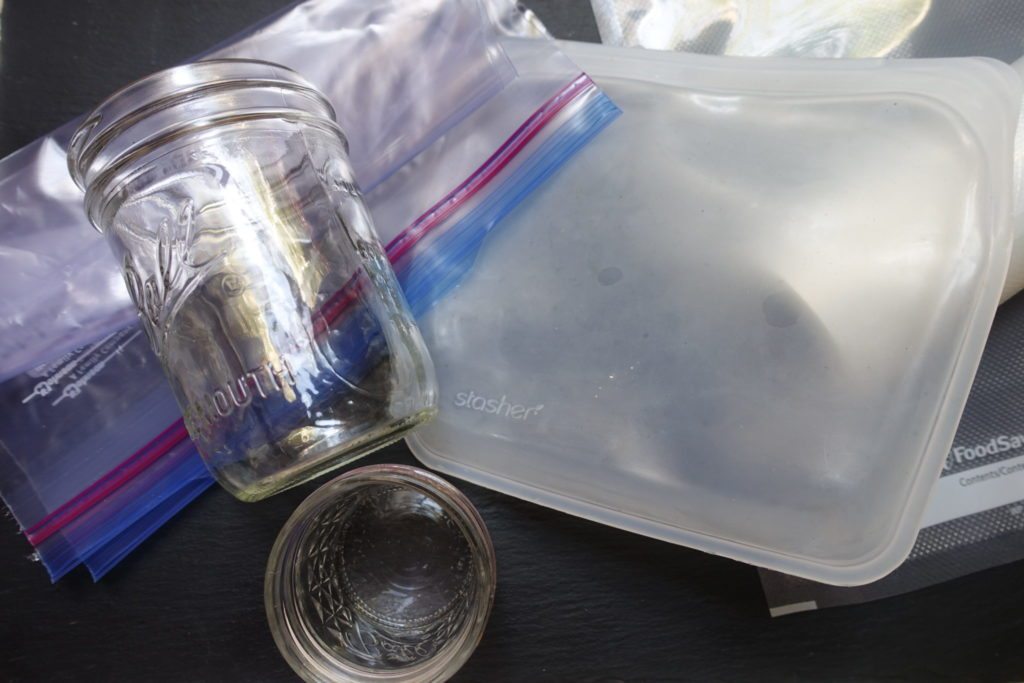
Acquire more virtually sous vide packaging and how to use each type with our Sous Vide Packaging Guide.
Sous Vide Containers
Anova clips onto the side of any pot or vessel with an adjustable clamp. So, y'all tin can utilise any size of pot that y'all already have at home. If y'all're planning to cook a lot of food at one time, plastic bins like Cambro and Rubbermaid are groovy choices.
You tin also explore creating a dedicated sous vide cooking vessel. Our community members have created some crafty cooler and cambro hacks. Have a expect at this guide on the best sous vide containers.
Getting ready with your first sous vide cook is piece of cake with Anova:
1. Simply clip the Anova's Sous Vide Cooker to a pot or container and fill with water above the minimum fill up line on the stainless steel Anova sleeve. (#anovafoodnerd tip: use hot water to cut down on preheating fourth dimension!)
2. Flavour your food and place it in the handbag. Drop the pocketbook in the water bath and clip it to the side of the pot.
3. Choose what yous're cooking from our collection of recipes and sous vide guides, then press outset on the screen of your cooker or in the Anova App.
Source: https://anovaculinary.com/what-is-sous-vide/
0 Response to "How To Set Temperature On Sous Vide"
Post a Comment